
July 17, 2026 · 5 views
How to say “Busybody” in Korean? 👃
Hello!
Some people love getting involved in other people’s problems, relationships, or private matters—even when nobody asked for their help.
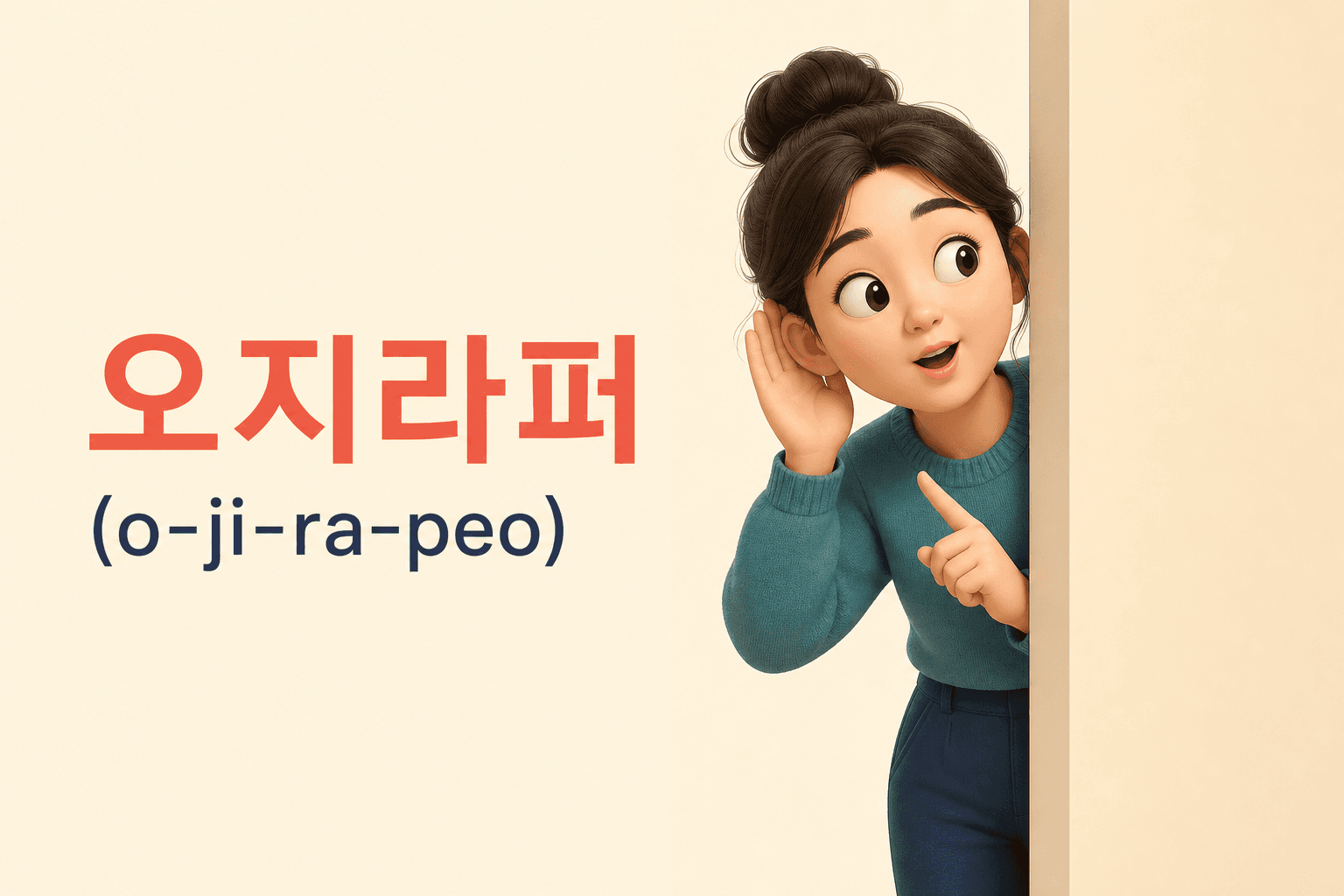
In Korean, this kind of person is often called an 오지라퍼 (o-ji-ra-peo).
What Does 오지라퍼 Mean?
오지랖 (o-ji-rap) originally means the front flap of an outer garment—the part of the clothing that hangs down in front.
This meaning appears in the expression 오지랖이 넓다, literally “to have a wide front flap.” Figuratively, it describes someone whose concern or involvement extends too far into other people’s affairs.
오지라퍼 combines 오지랖 with the English-style ending -er. It describes a person who gives unsolicited advice, interferes, or is overly interested in matters that do not concern them. Depending on the context, it can mean “busybody,” “meddler,” or “nosy person.”
오지라퍼 is informal and usually critical, although friends may sometimes use it jokingly.
Here are three common ways to use it.
1. Calling Someone a Busybody 🗣️
Use 오지라퍼 when someone repeatedly interferes in other people’s business:
Korean: 걔 진짜 오지라퍼야.
Pronunciation: gyae jin-jja o-ji-ra-peo-ya.
Meaning: He’s such a busybody. / She’s a real meddler.
걔 can mean “he,” “she,” or “that person” in casual conversation.
2. Saying Someone Is Too Involved in Other People’s Affairs 👀
You can use 오지랖이 넓다 to describe the person’s meddling behavior directly:
Korean: 걔는 좀 오지랖이 넓어.
Pronunciation: gyae-neun jom o-ji-ra-pi neol-beo.
Meaning: He tends to meddle in other people’s business. / She’s a bit of a busybody.
This expression is common, but it can still sound judgmental when said about someone.
💡 Quick Usage Tip
오지라퍼 (o-ji-ra-peo) — a busybody or meddler
오지랖이 넓다 (o-ji-ra-pi neol-tta) — to meddle in many people’s affairs
오지라퍼야 is casual. The polite form is 오지라퍼예요, but the word itself remains informal and potentially insulting.
🎯 Takeaway of the Day
걔 진짜 오지라퍼야! (gyae jin-jja o-ji-ra-peo-ya!)
Use it for someone who constantly interferes in other people’s affairs—but remember that it usually sounds critical.
One expression a day, make it yours.
하루에 한 표현을 내 것으로!
Written by ktalk.today